Sunday, October 11, 2015

Fun with Funghi: Risotto ai Porcini e Tartufo

FINALLY I can update again. Sorry for the long delay folks, my internet has been absolutely atrocious for a while now. I've been plugging away at my work at the monastery (hard to believe I've been here over a month now), though you never make as much progress as you want to. The internet seems to be working pretty well today, so it's time for a new food update!

The weather here has started to turn, and it's feeling more and more like Fall every day. Taking this into consideration, it seems like a good opportunity to cover some good Italian comfort food: risotto.

Carnaroli rice, shortly before fulfilling its destiny as a delicious risotto
The history of risotto is somewhat contested, but the traditional story as that it was introduced in Milan by the Spanish in the early 16th century. This first style, risotto alla milanese, remains a classic, but it requires saffron, an ingredient that is one of the most expensive substances in the world by weight. Unlike almost any other style of risotto, it is served alongside the main course, traditionally osso bucco. That's all too rich for my blood (plus I don't know how to track any saffron down here), so I'm going with another classic, risotto ai porcini e tartufo. Traditionally this would be a primo, a first course before the main course consisting of some kind of meat or fish and a vegetable side dish. A whole pot of this stuff is more than enough for an entire meal anyway, so this is a bit non-traditional I guess.

Much prettier than what I made, but this is what you're going for.
Now, some of you reading this are probably thinking that you've heard of risotto, and it's waaaaay too complicated for you to try making. Put this out of your head! There's no reason to be intimidated by this dish; the only vaguely difficult thing is that you need to be attentive while you're cooking. This is not a set-it-and-forget-it dish: you'll need to be watching and stirring for around 20 continuous minutes. Otherwise though, it's easy-peasy. Another misconception that I'll dispel here at the outset: while you may have seen (or even eaten) risotto at a restaurant that holds its shape, that's really an overcooked dish. You don't want a soupy final product, but you want it to "ooze" a bit. The key to making a good risotto is using the right kind of rice (more on that in a moment), and keeping the solid to liquid ratio correct so that the starch in the rice gets converted into a delicious, creamy sauce (almost a gravy) that connects all of those individual grains of rice. If you wind up with something that's about the consistency of fried rice, you've gone too far. It'll still taste fine, but it shouldn't be the goal.

I'm sure this tastes good, but booooooo.
With all that being said, let's get started. For hardware, you'll need a couple pots, one for the risotto itself (if you have a cast iron dutch oven that would be ideal, but don't use it if it's very large and you're not making a large batch. Anything with a little heft to it will be fine) and another to keep the cooking liquid simmering. You also want a ladle as well as a wooden spoon, and of course a knife. Here's my setup:

You can also see the cooking fat melting down here.
As for the actual ingredients, you need rice (either Arborio, Carnaroli, of Vialone Nano. In the US you'll probably only see Arborio), olive oil, butter, a few cloves of garlic, a small onion, some white wine, vegetable broth and/or mushroom broth (I'll get to that), dried porcini mushrooms, parmesan cheese (please don't use the shelf stable junk in a can), and either a black truffle or some kind of prepared black truffle sauce. You should be able to find the porcini in most grocery stores (try either Wegman's or Graul's for those of you in Baltimore, and Kroger should carry them in Ohio). The truffle/truffle sauce may be harder to track down, and you could omit it if you want to. It adds a really great, earthy flavor though. One last note: I don't have any proper measuring equipment here, so I've mostly been eyeballing everything and going by the weight indicated on the packages. This might make it a little tricky to match my exact recipe, but think of it this way: I didn't measure *anything* and it turned out great, so don't sweat the details. To begin, you want to soak your dried mushrooms in hot/warm water for at least 15 minutes or so. I used 50g of mushrooms (a little less than 2 oz), and you want enough water to cover the mushrooms plus a little bit more. Once they've soaked, remove the mushrooms from the liquid and chop them up, but SAVE THAT LIQUID! You basically have mushroom stock now, and it's super tasty. Strain the liquid, preferably through some cheese cloth, as there will likely be a little bit of grit. I unfortunately couldn't do this so I tried just carefully ladling out the liquid without disturbing the sediment, but I still had a little bit make it into my food. Don't be like me, strain the liquid! Also finely dice your onion and garlic. You should have something along these lines:


Meanwhile, put your heavier pot over low heat and with about a tablespoon of olive oil and about 2-3 tablespoons of butter. This seems like a lot, but like I said, this is comfort food! Also, put your strained mushroom liquid into your other pot, and get it simmering. You will need this either simmering or right on the verge for the entirety of the cooking process. Once your butter is melted, add your onion and garlic (along with a little salt) and sweat them. You aren't looking for color here, you just want to soften the onion up.

Try to avoid any errant bits of mushroom. Again, don't be like me!
Once the onion starts looking a bit golden, add in about a 1/4 cup of white wine (dry white wine, of course), and cook until the onion has basically melted. At this point, it's time to add your rice. I used about 300g, which was about half of a small box. Again, this probably isn't super helpful, but this was enough rice for 2 main dish servings. I'm guessing you'd want around 2-3 cups (dry) for 4 people, and I would also double (piu o meno, as they say here) the other ingredients. Add the rice directly to the pot, right from whatever package you bought it in: DO NOT WASH IT. If you rinse the rice, you'll lose all that starchy goodness that makes risotto, well, risotto. Once you've added it, mix it all together thoroughly. The goal here is to get every single grain of rice coated in the oil, butter, garlic, and onion mixture. You'll be able to tell when you're done with this step, as all of the grains will be nice and glossy, and very lightly toasted. What you don't want, though, it to get any color on the rice. That can be very delicious, but again, it's not risotto! If you've stirred and stirred and the grains still don't look coated, you need a little more oil.


Next, add in those chopped porcini mushrooms and stir it up until well mixed:

Looks like wild rice, right?
After all mixed, start adding your simmering mushroom broth. It is SUPER important that your broth be hot, or the rest of the recipe isn't going to turn out right. Also, you only want to add enough to cover the rice mixture. It should look sort of...swampy, if that makes sense, but you don't want the rice drowning in liquid. Too much liquid will turn this into ordinary rice pilaf, instead of creamy risotto. The small amount of liquid turns all that starch into a creamy sauce, so don't drown it!

Something like this is what you're going for.
From here on out, you'll need to be paying close attention to the pot. After adding the broth, stir the simmering mixture near-constantly until the broth has been absorbed into the rice mixture, at which point you add more broth, and so on and so forth. Each time you just want to add a small amount of liquid, just enough to cover the rice. If you run out of mushroom broth, use (simmering!) vegetable broth, or even water in a pinch. Again, there are no firm measurements here: use however much liquid is necessary. You will probably be done this process after about 20 minutes. You want the rice to be "al dente" (which literally means "to the tooth", which really doesn't tell you much), cooked through but with just a slight bit of snap to it. What you don't want is mush, so don't overcook! The only way to tell when this is done is to taste it periodically. If you find yourself in the unfortunate situation of there still being too much liquid in the pot and your rice is basically done, you can crank up the heat and stir like crazy to compensate. This should be a last resort though, it's easy to overcook the rice! When the rice is done, take the pot off the heat and stir in a little more butter (about a tablespoon or so, maybe a touch more) and a generous helping of grated cheese, at least a cup. Then, add your truffle/truffle sauce. I used about a tablespoon of a prepared truffle sauce; if you're using fresh, you would shave it and then add to the mixture. This is what it should look like, more or less:

Those little black flecks are the truffles. Be careful, they have a very powerful flavor, so go easy on them!
This smelled so good that I couldn't wait to eat it long enough to take a picture of the completed plate! Seriously, you need to try this. You could very easily substitute other ingredients for the mushrooms and truffles, but you need to try making it this way at least once. As for what to drink, you could go a couple different directions. You could try a nice acidic white like a Pinot Grigio, to cut through some of the fat in this dish and really let the earthiness of the mushroom and truffle shine through. Alternatively, you could go with a light-ish red, like a Valpolicella, to add a little fruit and freshness to the dish. Personally though, especially if you are including the truffles, I think you need to go with a big red from Piemonte (the region best known for truffles), something made from the Nebbiolo grape. If you're a real oenophile (and have deep pockets) you could drink a nice Barolo, or if you aren't familiar at all with the wines of the region you could try a more simple Langhe Nebbiolo. For me, I think the best option lies in between, with Barbaresco. It's not cheap, but this is not an everyday meal either. The rich, earthiness of these wines work really well with the above risotto, and it's what you'd drink if you were eating this dish in Piemonte. I'll be covering the wines of that region in my next wine update, so keep your eyes peeled.

On Wednesday I'll be heading to Istanbul for a week (to get around that pesky "no more than 90 days in the EU" rule), so my next history update will deal with that area rather than Italy. *Hopefully* I'll be able to update twice in the coming week, but we'll see how it goes. Thanks for reading!

Saturday, September 26, 2015

Toscana and Lazio, Red and White: Wine from Central Italy

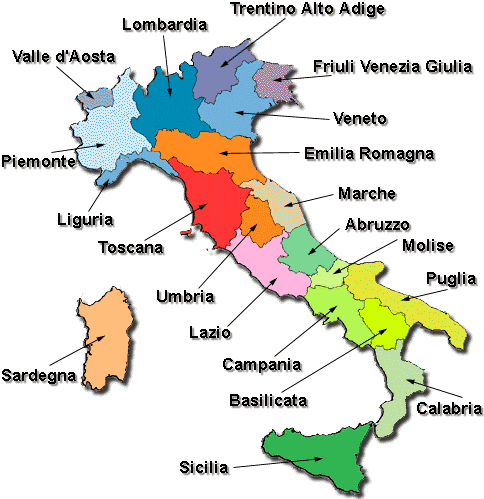
Sorry about the lack of updates lately everyone! My internet has been pretty atrocious all week, and so getting a post written and uploaded has been impossible. To make up for it, today's wine post will be a two-for-one. I'll be covering 2 different regions of Italy, one very well-known for wine and the other almost entirely ignored: Toscana and Lazio.


We'll start with Toscana, better known as Tuscany in English. In many ways, Toscana is responsible for the entire modern Italian wine industry. Though Italy has always been a large producer of wine--and a small portion of it very well regarded--for about the first 3/4 of the 20th century most Italian wine was seen as substandard much too old-fashioned. Grapes were grown using out-of-date agricultural techniques, wines were made using traditional methods for no reason other than tradition, and the overwhelming majority of Italian wine exported from Italy was something like this:

Cool bottle, but the contents may as well be vinegar
All of this began to change with the emergence of the so-called "Super Tuscans" onto the scene in the early 1970s. The regulations developed by the Italian government in the 1960s (the IGT/DOC/DOCG hierarchy that I discussed in my last wine post) in many ways cemented bad wine making processes. Chianti, for example, was required to be made with at least 10% white grapes, which made it very fruity and drinkable, but closer to juice than a sophisticated wine for the international market. The "Super Tuscans" were wines produced with more modern techniques, and often including grape varieties not native to Italy, such as Cabernet and Syrah. They didn't qualify for the much coveted governmental designations, but they were good. And priced accordingly, of course.

The very first Super Tuscan, Tignanello, with 1971 being the first vintage. A bottle of the most recent vintage (2012) will run you about $70-80 in the US.
The successes of the Super Tuscans, which were really being seen by the early 1980s, completely changed the Italian wine industry. Rather than adhere to the strict government regulations, wine producers began to produce the best wine possible regardless of technique or grape varietal. By the 90s they actually managed to convince the government to change these regulations, creating the IGT designation which allowed for much more variety in the production of a region's wine. Though the DOC/DOCG rules are still somewhat problematic, particularly in Toscana, Italy now produces a wide variety of wines that can stand up on the international market--thanks to the Super Tuscans of the 70s and 80s.

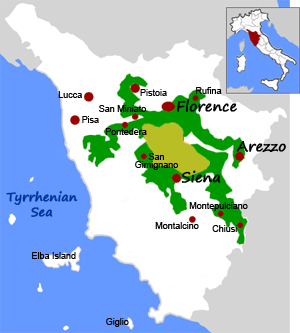
The staggering variety of Tuscan DOCs and DOCGs
Along with Piemonte and the Veneto, Toscana is one of the 3 great wine producing regions of Italy and, as you can see from the above map, there is quite a wide variety of wine produced there. While a lot of this isn't seen in the US, much of what does make it across the pond stands among the very best wine in the world. I obviously won't be going over all or even most of these, but I'll touch on a few of the most famous and highly regarded. Let's start at the top: Brunello di Montalcino.

The city of Montalcino
"Brunello" actually refers to a specific variety of grape, but after extensive testing it was determined that this supposedly unique grape was actually Sangiovese, a grape used in most of the red wines in central Italy. There are references to the wine going all the way back to the 14th century, though wine in those days would have been very different from what we enjoy today. In order to qualify as DOCG Brunello, the wine has to spend a minimum of 2 years in oak. Brunello is regarded as one of Italy's greatest wines (much like Barolo, which I'll be discussing in a future post), and prices naturally follow. A bottle will set you back around $100 if it's from a quality producer. As for what to expect, Brunello tends to be fairly fruit-forward, like many new world wines. Be warned however; the tannin in this wine (that sort of mouth-puckering quality red wines have) mean that you should probably be drinking vintages that are at least 10 years old; in fact, these wines can stand up to decades of aging. Moving on to a less well-known but no less impressive Tuscan wine: Vino Nobile di Montepulciano.

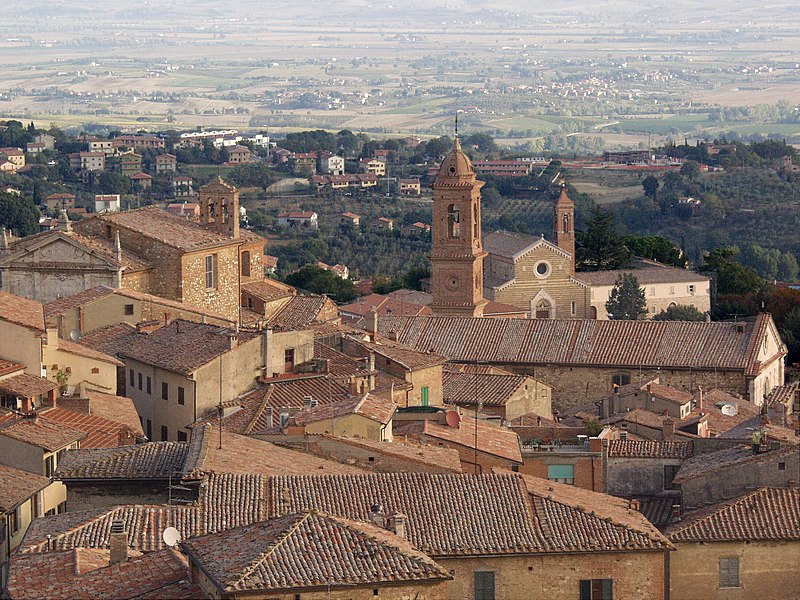
The city of Montepulciano
Like Brunello, Vino Nobile is made primarily from the Sangiovese grape, though up to 30% can come from other local sources. In terms of character it's quite similar to Brunello, though a little less rich and a little more earthy. It's also much, much more affordable: if you can track down a bottle it should run you around $20. It also requires (and can tolerate) less aging than Brunello; you probably want to drink it within 15 years or so. Last but certainly not least are Chianti and Chianti Classico.

Fava beans optional
Chianti is surely the best known Tuscan wine, and as I mentioned above it was also responsible for the poor international perception of Italian wines. "Chianti" actually refers to a specific region of Toscana that was first formally delineated in the early 18th century by the Duke of Florence, Cosimo III de'Medici.

I'm speculating, but it looks like old Cosimo may have been a victim of the inbreeding of European nobles...
The area he specified is what is now the Chianti "Classico" area. The popularity of Chianti led the Italian government to make some...questionable decisions in the 1960s, hugely expanding the traditional zone and elevating the entirety of it to DOCG status, a designation that wasn't really warranted. As a result, lots of low quality wines got to call themselves by a prestigious title, and Chianti's once-great reputation became less and less valuable. While this continues to be a problem, if you stick to Chianti Classico you get something closer to what caused all the fuss in the first place.

Green is the Chianti region, and the yellow is Chianti Classico
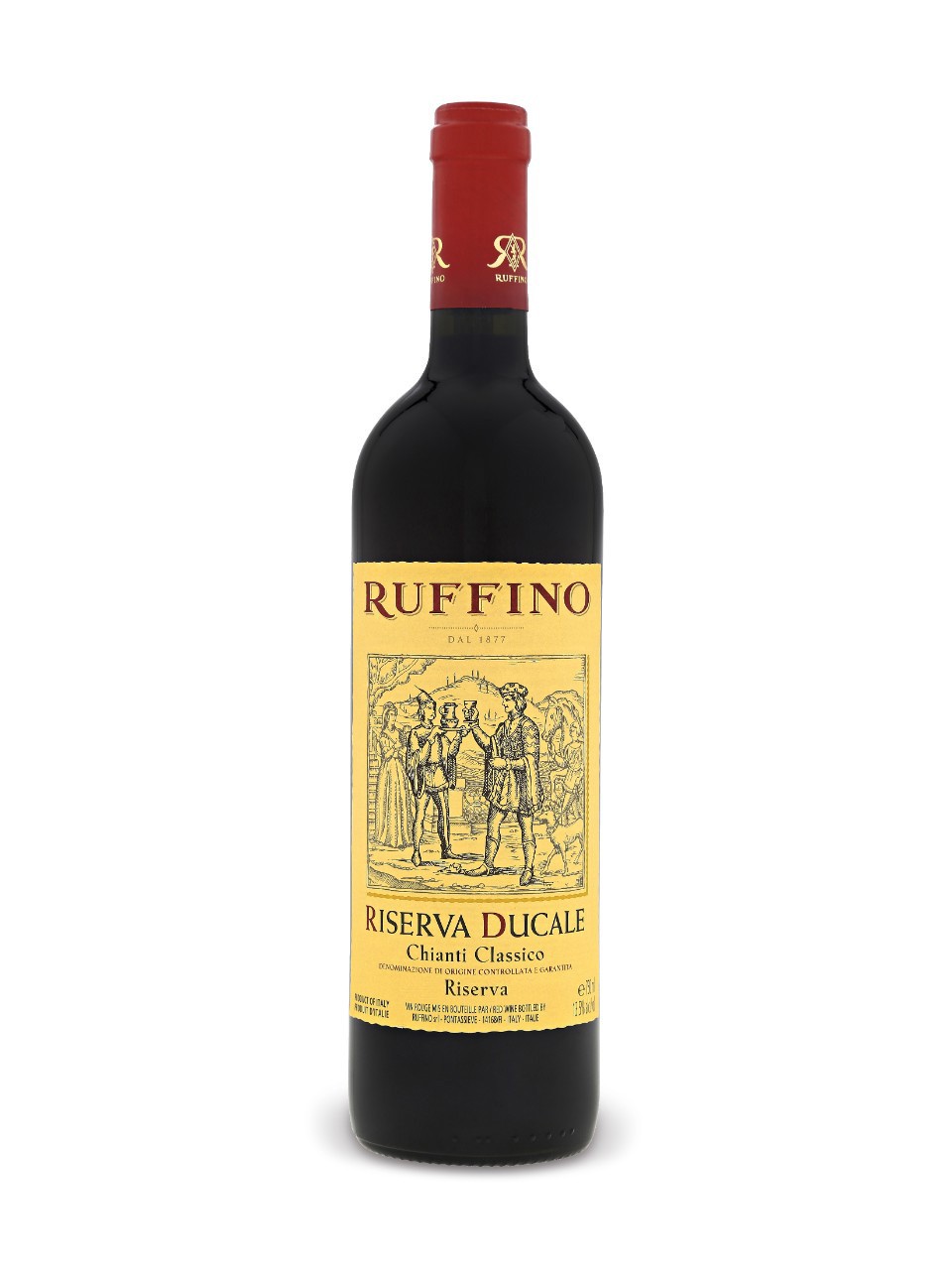
Any liquor store in the US will have Chianti, and most likely several bottles to choose from. Like Brunello and Vino Nobile, Chianti is made primarily from the Sangiovese grape. It tends to be a bit less tannic than either of the above, and has some spice (like cinnamon and clove) to it, as well as red fruits like cherry and raspberry. If you're looking for something to go with your spaghetti, this is your wine. High acidity and its balanced nature makes Chianti perfect for Italian food. You can find Chianti all over the price spectrum, but I think that the $15-20 range will get you the most bang for your buck. I would also recommend sticking to Chianti Classico; it's not that there aren't perfectly nice non-Classico bottles, but if you stick to the Classico you'll get a better idea of the unique properties of the region. You're likely to see a huge variety of labels, but I like Ruffino quite a bit. You can identify the non-Classico variety by the image of a medieval knight on the label, but the Classico looks like this:

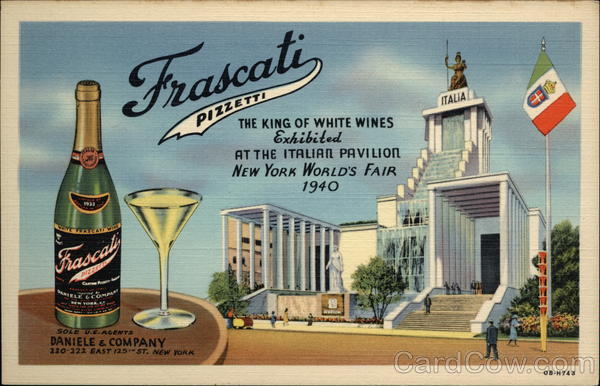
If you want to see what central Italian red wine is like, Chianti Classico is the perfect introduction. But now, we move from one of Italy's best-known regions to one of the least: Lazio. The Italicized version of ancient Latium, Lazio is the region in central Italy just south of Toscana. Home to lots of fascinating history (Rome is here, after all), it's not a region particularly known for its wine. Much of the wine here is produced by large factories, and the quality tends to be on the low side. There are some gems to be found though, at least if you like white wine. The geography and climate make the region better suited for whites than reds, but most don't make it out of the country. If you happen to see some wine from Lazio in the US, it's probably Frascati.

Though I've never heard it called "the king of white wines" before, it is quite tasty
Dry, refreshing, and easy-drinking, Frascati is produced in the hills just south of Rome. It's made from Malvasia and/or Trebbiano grapes, and is generally a very pale yellow color. You can expect flavors of orchard fruits like apple and pear, and some minerality as well. And the best part: you shouldn't have to pay more than $10 for a bottle. You generally want to buy the newest vintage that you can find, as this isn't a wine meant for long aging. This wine is for drinking, not for thinking.

That should do it for this update. Assuming my internet holds up, I hope to be posting more regularly moving forward. Thanks for reading!
Saturday, September 19, 2015

The Thrill of the Hunt: Pollo alla Cacciatora

For this week's food update, I decided to go with a recipe that should be somewhat more familiar to American tastebuds--and certainly made from ingredients more readily available from American grocery stores. I landed on pollo alla cacciatora, aka chicken cacciatore, a staple of American Italian restaurants.

Though we'll be skipping the red checkered tablecloth and straw-wrapped Chianti, though
The name actually means "hunter's chicken," and this is a rustic, peasant dish meant to stretch what meat was available. Traditionally, this would be made with an old hen whose egg-laying days were done, but finding anything but very young chickens at the grocery store is pretty unusual these days. Any chicken will do. This recipe comes from Toscana (the region of Italy made famous by Florence, Pisa, and its wine. More on that in my next post), and calls for the following ingredients: bone-in chicken (I used 2 legs and 2 thighs, but you could easily use an entire chicken broken down without changing the rest of the recipe), 1 onion, 2 carrots, 3 stalks of celery, a few cloves of garlic (as much as you want, really), 2 stalks of fresh rosemary, 1 can of tomatoes (14 oz, I think; I used one labelled 400g), Italian parsley (aka flat-leaf parsley. The curly stuff is really only for garnish), nutmeg (optional, but delicious), olive oil, and red wine (preferably something Tuscan, like a Chianti Classico. My next post will be about Tuscan wine, for anyone who wants more guidance than this). For the pan, use something wide and relatively deep, like a brasier, sautè pan (if the sides are high enough), or a dutch oven.

The chicken I used. It seemed silly to use a whole chicken for just me, and I much prefer the dark meat anyway. You can increase the amount of chicken without changing anything else in the recipe.
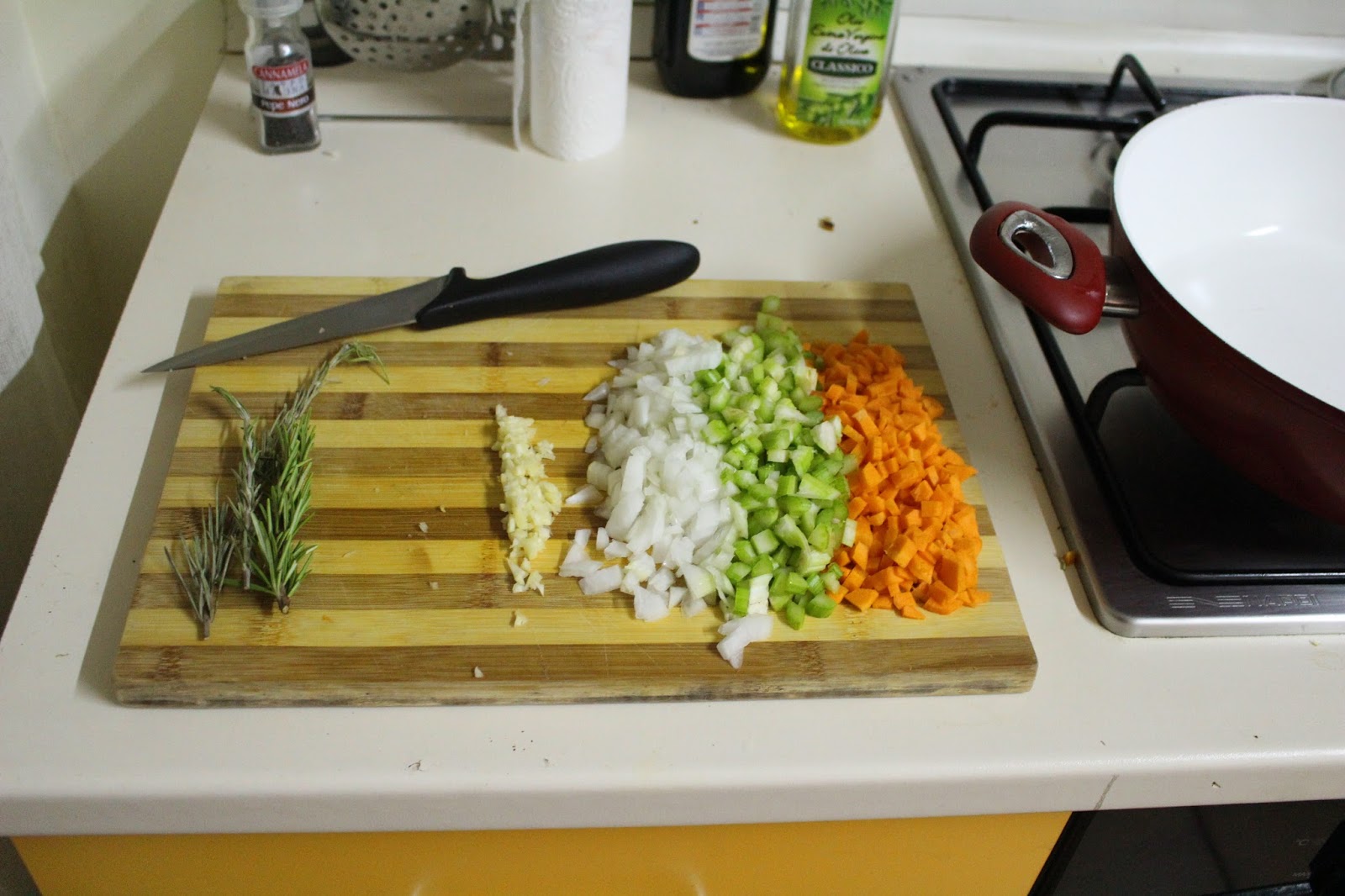
To start, chop up all your veggies except the rosemary (leave it on the stalk) and parsley (that comes last):

You want roughly equal proportions of onion, celery, and carrot
Heat up several tablespoons of olive oil over medium-high heat and begin browning the chicken, after a liberal salt-and-peppering. Do it in two batches if need be; don't crowd the pan!

This is more or less what you're going for
Once the chicken is nice and browned add all the veggies you just chopped, turn down the heat a bit, and make sure that they're equally coated in the cooking oil. Alternatively, you could remove the chicken before you add these veggies, in order to make them cook a bit more evenly. I liked doing it with the chicken still in the pan, because when everything was said and done the chopped carrot and celery still had some snap to them, instead of turning to mush. Your choice, though!

I moved the chicken around a bit at this point too. All those veggies need oil!
Sautè for a few minutes, until the veggies begin to soften and the onions start to go clear. Next, add the wine, about a cup, and deglaze with a wooden spoon.

I also used this opportunity to rinse any errant veggies off the top of the chicken
Next, add your tomatoes after thoroughly crushing them up. I generally just use my hands and break them up until they're the consistency of a chunky marinara sauce. Alternatively I guess you could use a food processor or even a blender, but I don't see the point. If you took the chicken out of the pan earlier, now is the time to return it.

As with last week's rabbit, you don't want so much liquid as to entirely cover the meat
Reduce the heat to a simmer, cover the pan, and let it cook for about 30 minutes or until the chicken has cooked through. This would also be a good time to work on whatever you want to serve alongside the chicken. I decided on a nice creamy polenta, but pasta (something that can support a heavy, chunky sauce, i.e. not thin spaghetti or something similar) or even some mashed potatoes would work just as well.

Water, cornmeal, a little butter, some grated hard cheese, and 15 minutes is all you need for the perfect side dish.
After 30 minutes, grate some nutmeg into the pot and add your parsley, finely chopped. I let it cook another 5 minutes or so, to let the sauce thicken a bit You will probably need to adjust the seasoning at this point as well; I added a bit more salt and pepper.


Serve as such:

There's a thigh buried under the sauce
Super simple, and super tasty! Drink a glass of whatever wine you used to cook with (Chianti, in my case), and enjoy!

Thursday, September 17, 2015

Gaeta: Ancient, Medieval, and Modern

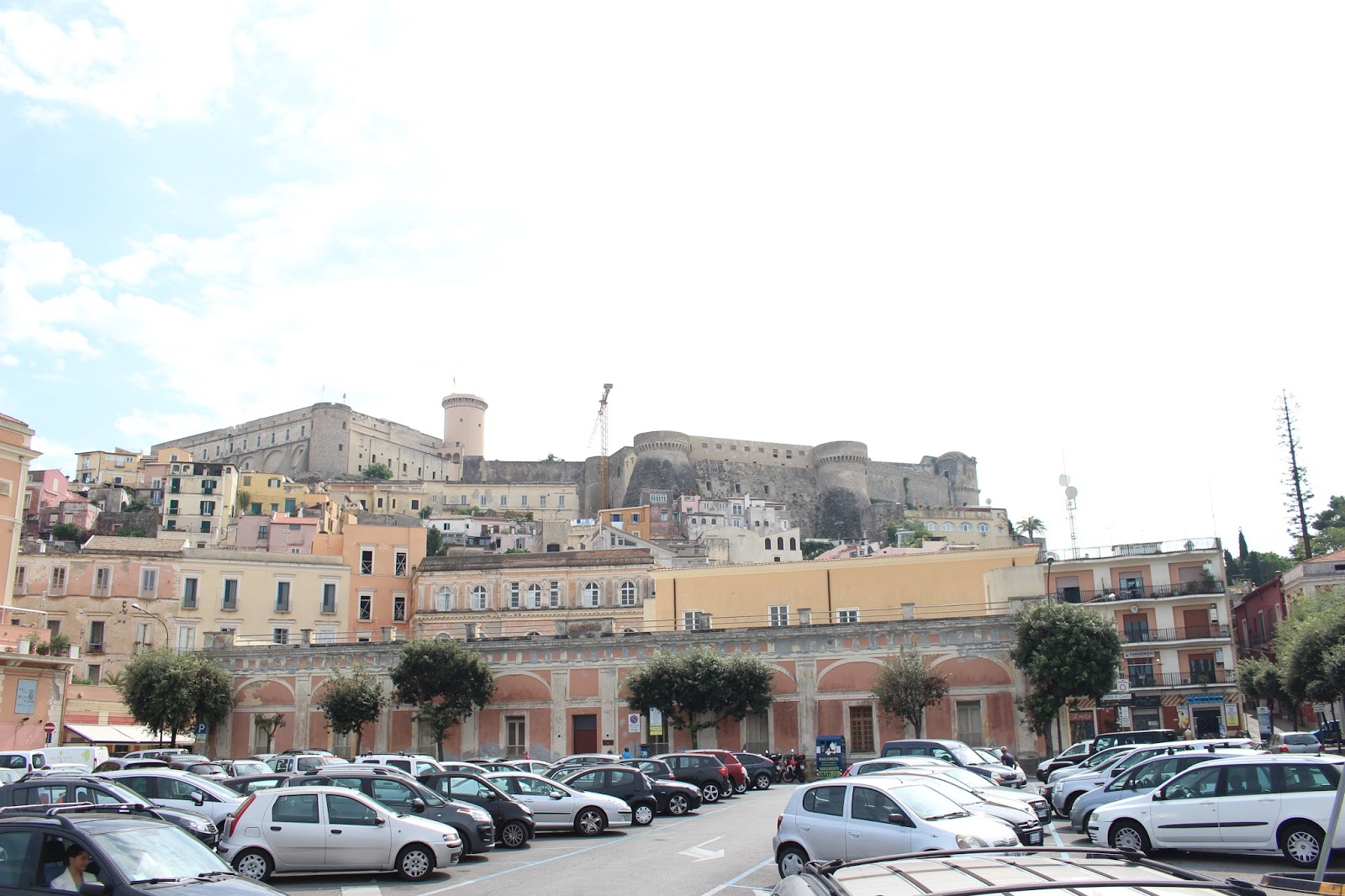
Last Sunday, I decided to take advantage of my mobility and go for a drive for some sightseeing. I wound up settling on Gaeta, a fairly small town on the Tyrrhenian Sea. The place comes up often in the sources that I'm reading for my dissertation, but I'd never had the opportunity to visit before; the town doesn't have its own train station, and so visiting is fairly tricky. Even taking a combination of trains and buses would have meant over 3 hours of travel each way, while the drive was only about 1! It did mean braving some of Italy's state roads though, 1 lane going in each direction where it is apparently normal to tailgate someone until they move to the right of the lane, at which point you pass them--regardless of any oncoming traffic.


But, after a little white-knuckle driving, I arrived in the gorgeous seaside town. Though it's near the end of the summer, the weather is still hot enough that quite a few people were coming to enjoy the beaches and the breeze off the sea. And of course, the incredible views:


These are some shots of the modern town, but Gaeta has a very long history. It's one of the southernmost points in Lazio, the region of Italy where I'm living on this trip, and is closer to Naples than Rome. The city is also a part of the "Riviera d'Ulisse"--the Riviera of Ulysses--a stretch of coastline where the legendary Ulysses/Odysseus buried his friend Elpenor. Since the classical period at least, Gaeta has been an important military city. The above shots of the modern town are on one side of Monte Orlando--which I'll be getting to shortly--but the ancient and medieval city is located on a narrow peninsula jutting out into the sea, guarding the important Gulf of Gaeta. Since the 1960s there has been a NATO base here, and today is one of the bases of operation for the US Navy's 6th fleet.

USS Mount Whitney, the command ship of the 6th fleet
I didn't see any soldiers, but I definitely noticed the impact of the base: most of the locals spoke at least a bit of English, which was certainly helpful since my Italian is still quite poor at this point (I've mostly been saying "I'm sorry, I don't speak very much Italian"). I went mainly for the breath taking views, but there were also some interesting manmade sites to see. I started at the base of Monte Orlando, at a sanctuary that contains the incredible "montagna spaccata," the "split mountain."

Not a place for the claustrophobic
According to local tradition, the rock split at the moment of Christ's death on the cross. Accordingly, there is a small chapel, constructed in the 15th century, dedicated to the crucifixion. The chapel itself was quite plain, but the view from the roof was to die for:

It's hard to get a sense of the height here, but that water is a loooong way down
Though I didn't go down to the bottom, there is a small spot known as the "Grotto of the Turks," where Arab (I don't know why "Arab" became "Turk," but there you have it) pirates in the Middle Ages would hide until nightfall, at which point they would raid the coastal towns. Instead of heading towards the water, I began climbing up the mountain. I was treated to some more nice views on the way, as well as some interesting ancient ruins.

Montagna Spaccata from above
Another shot of the beach in the modern city
Some interesting ruins near the top of the mountain, that were unfortunately completely devoid of signs. Based on the construction I think that they were Roman, but beyond that I'm not really sure.
At the very top of the mountain was a much more impressive monument, the mausoleum of Lucius Munatius Plancus, a Roman general from the 1st century BC. He was an important figure of the numerous civil wars of the period, and was involved in the second triumvirate near the end of his life, eventually supporting the future emperor Octavian--as any astute Roman did. Plancus had a villa on the mountain, and so on his death he had a massive mausoleum constructed for himself and his family. Though a lot of the decorations were either plundered or destroyed over the centuries, it remains quite an impressive structure:

Not quite as impressive as the Mausoleum of Theodoric I visited a few years ago in Ravenna, but worth checking out nonetheless.
There were some interesting pieces on the inside as well:

A reconstruction of what the tomb looked like 2000 years ago. The mound on top was apparently an ancient Etruscan tradition
The man himself
Some pieces of the structure that were stripped off at some point and reused in the town
Once I was done touring the mausoleum, I began my descent down the other side of the mountain, to get to the medieval city. the signage wasn't great and so for while I was worried I was going in the wrong direction, but eventually I turned a corner only to see this:


I was still quite a ways off, but at least I knew that I was heading in the right direction. It's not known when the first castle was built on this site, but historians think that the original structure probably dates to the 6th or 7th century. Our first written record comes from the 13th century, and the current structure is from the 15th century. Until the 1980s parts of it were still in use as a prison! As I got closer to the bottom of the mountain I could see the foundations a bit better. This would have been quite a formidable military structure in its day.

This would have been quite the vantage point for control of sea
Once I finally got to the bottom, I could see how well the castle would have dominated the city:


Since it was a Sunday afternoon, along with the fact that I had just climbed and descended a small mountain, I didn't try to get into any of the sites in the old city. Besides, what I want to see most--a Byzantine church from the 10th century--is currently under renovations, and so inaccessible. I did find some interesting architecture at the city's cathedral though: a beautiful Romanesque bell tower.

From what I could find, the tower was built in the early 11th century, presumably while Gaeta was still a (semi)independent duchy.
Looking up from the bottom
By this point I was thoroughly exhausted, so I decided to call it a day and head back to Cassino. Given how close Gaeta is to where I'm staying, I may go back at some point and spend more time in the medieval part of town, now that I've seen what Monte Orlando has to offer. As an interesting aside, on the drive back home I rounded a corner and got a beautiful view of Montecassino, while I was still about 15 kilometers away (that's a little over 9 miles in freedom units). Really interesting to see just what a huge area could be observed and controlled from a point as high up as Montecassino.

That should do it for this update, thanks for reading!

Sunday, September 13, 2015

Italy is for Oenophiles

While I've been greatly enjoying the vino that Italy has to offer, I've been struggling to come up with something interesting to write about them. I could give tasting notes, but that just seems pretentious, particularly given that I don't really know what I'm doing (and I don't have much of a palate). I could just write about whatever cool vintage/producer/style that I find, but that doesn't provide anything of use to people living back in the States (for reasons that I'll mention in a bit). I could skip the wine posts entirely, but plenty of my friends and family enjoy wine, and it seems to me that I can come up with SOMETHING worth talking about.

What's a wine-o to do?
After lots of thought, I decided that the best thing to do would be to talk about Italian wine in more general terms, AND feature some styles--if not producers--that should be accessible in the US. To do this, each week I'll be posting an update about one of Italy's wine producing regions with some information about the local styles, traditions, and so on, as well as a (slightly) in depth discussion of one of these styles that I've actually tried, and that should be available back home. I think that this will be a good system but if anyone reading this has ideas please let me know!

Before I get into these specific regions though (I'll be starting on that next week), there are some more general bits of information about Italian wine that are worth knowing (and that help to separate it from the rest of the wine-producing world). First is that, to a far greater extent than most New World wines (or even French wines), Italian wine is really meant to be enjoyed alongside food.

Do avoid anything that comes in with a straw covering, though
This mainly has to do with the attitudes that Italians have had towards wine over the years, and the corresponding decisions that the wine producers have made to appeal to their market. In more specific terms, Italian wine and food go together because of the very high acidity that wines from Italy tend to have. Such acidity can be overpowering on its own, and likewise Italian food has a tendency to be fairly fatty (consider the rabbit  fricassee I made last week, or pasta with a rich meat sauce, one of any multitude of local cheeses, the ubiquity of olive oil, the list goes on), though this is certainly not always the case.  The takeaway is that to best enjoy a given Italian wine, you should probably be nibbling on something alongside it, preferably a food from the same region. There are plenty of other guidelines for matching food and wine, but I'm not going to get into that right now.

You can do a lot worse than this to start, though.
Another important (or at least interesting) thing to know about Italian wine is that Italy and France trade places for the most wine production on a regular basis (from 2010 to 2014, Italy was the top producer 3 times). This of course does NOT mean that it produces the best wine; in fact, a lot of Italian winemaking is geared towards mass production and consumption rather than quality, especially in certain regions. Italy also has a mind-boggling variety of different grapes, numbering in the thousands. This, coupled with factory-style production can make finding something enjoyable difficult. Thankfully, Italy's government has a system to help consumers, as well as the producers.


While in Italy, as in France, the grapes used in the production of the wine are not required to be on the label, one of the above designations is, and these can tell you quite a bit (in conjunction with some Googling). They're definitely NOT a guarantee of quality, but they can give you enough information to know whether you might like a particular wine or not, based on what other wines you like. At the bottom is "table wine," which is essentially a label that means "made in Italy." The grapes must come from Italian vineyards, but that's about it. I don't think we get much if any of this classification in the US; import taxes are quite high, and there's no way these could compete with prices of locally made bottles. Moving up, IGT or "typical geographical indication" specifies that at least 85% of the grapes must come from a single region (which is also noted on the label), such as Tuscany, Piedmont, etc., pretty loose rules but still more strict than VdT. More stringent still is DOC, "registered designation of origin." A wine with this designation adheres to a specific set of rules (such as geographic area, allowable grapes, alcohol content, aging time and method, etc.) which vary based on what DOC the wine is. For example, a DOC Soave must be made in a particular region of the Veneto in north-eastern Italy, be made of at least 70% Garganega grapes, and there is also a limit on the amount of production from a given area of land. By contrast, a DOC Valpolicella must be made in a different particular region of the Veneto, be made of anywhere from 45%-95% Corvina grapes, and anywhere from 5%-30% Rondinella grapes (along with several other rules). If this all sounds confusing, it is. But the benefit is that by reading a DOC label, you can learn a lot about how that wine was made, which will (at least in theory) inform you of characteristics that you like or dislike. At the top of the pyramid is the DOCG or "registered and guaranteed designation of origin" classification, which is essentially more of the same as DOC, but with even more stringent rules governing the production of the wine, plus a government sticker verifying that the wine has been inspected and judged to meet the appropriate standards.

You've probably seen this before
If this all sounds confusing, it is. But, it's really the only way to differentiate between the incredible variety of wines being put out by the country. Given that we all carry computers around in our pockets, it's not too terribly difficult to look at a label, Google what you find (such as "Chianti Classico DOCG," as we see in the above picture), and find out what the wine producer had to do in order to achieve the designation. Whether or not you personally actually LIKE a given designation is something that you can only find out by trying them! This is also a good time to mention that these classifications absolutely don't guarantee quality; there are definitely still plenty of rotten Chiantis out there, and there are some really fabulous IGT wines (see the so called Super Tuscans that came on the scene in the '80s). Rather, these are basically a crib-sheet for what grapes were used, where it's from, how much alcohol, and so on and so forth.

The last thing that I wanted to mention is the difficulty of finding a great deal of Italian wine back in the US, thanks to particularly high import taxes (or perhaps export taxes, I'm not sure). This means that so many wines that are affordable here in Italy would be so expensive to sell in the US that there simply isn't any point in importing them. The more expensive the initial purchase price the less this matters, but nevertheless it greatly restricts what you'll see on the store shelves. As I mentioned above, I'm going to try to stick to reviewing/discussing wines that you should be able to find in the US, but it would be virtually impossible to stick to specific producers that sell in the US (since I've been here, I think I've seen a single label that I recognize from home).

I think that'll do it for this update. Sorry for how dry (ha!) it was, but I think it will make my future posts about wine more interesting and intelligible. Until next time!